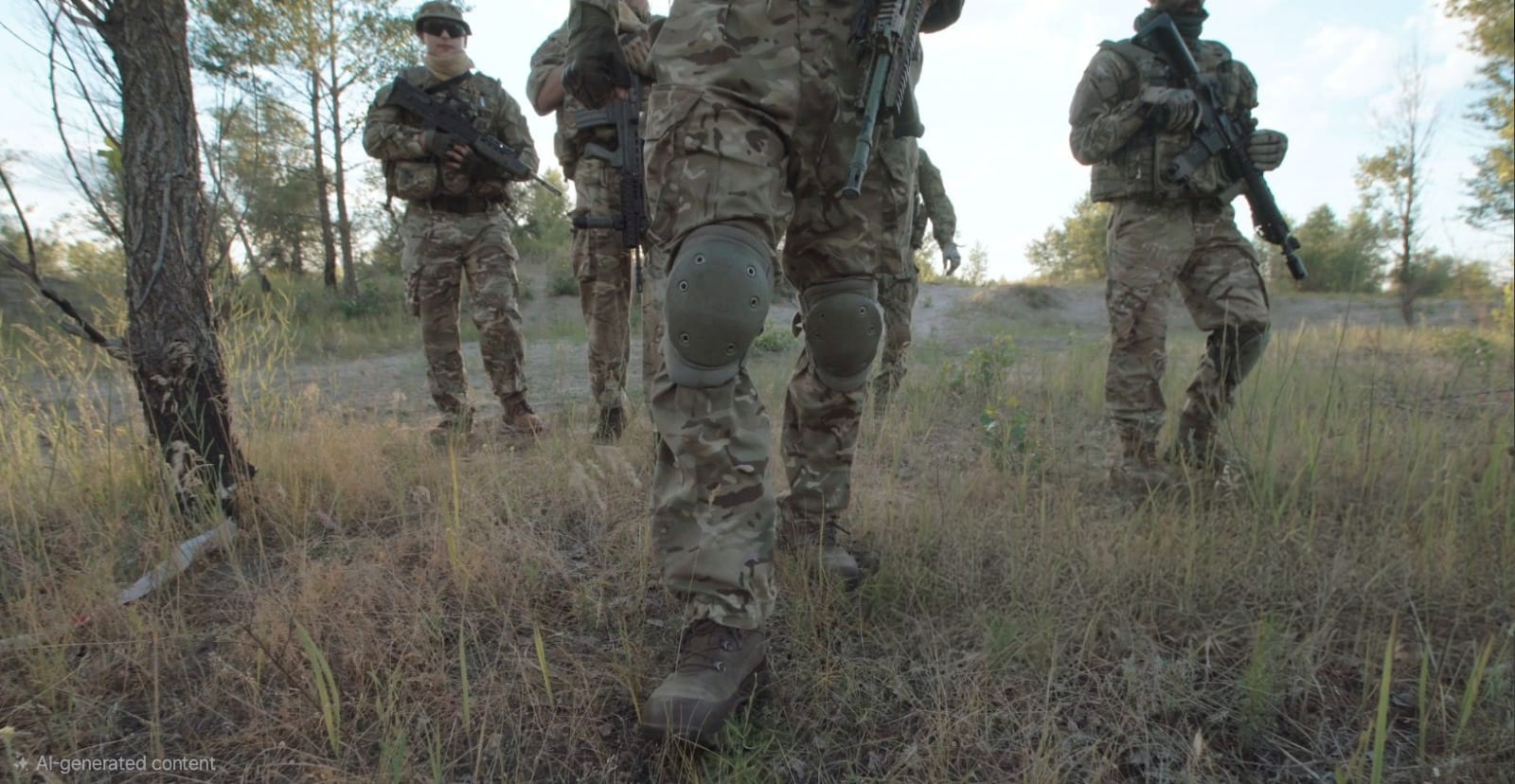
In recent decades, the nature of warfare and global security has undergone a profound transformation. The traditional image of war as a strictly state-controlled affair , where national armies alone held the monopoly on the legitimate use of force has been challenged by the emergence and rapid growth of Private Military Companies (PMCs). These private actors, operating on the margins between the public and the corporate spheres, now play a crucial role in contemporary conflicts, peacekeeping operations, and even humanitarian missions. Once considered a taboo associated with mercenarism, the privatization of warfare has become a normalized and profitable global industry.
The end of the Cold War, the rise of neoliberal economic policies, and the increasing complexity of modern conflicts created favorable conditions for the emergence of these actors. Governments, facing growing political pressure, financial constraints, and public aversion to military casualties, have turned to PMCs as flexible, efficient, and cost-effective alternatives to traditional armed forces. Companies like Blackwater, DynCorp, or Aegis Defense Services have been contracted to carry out essential missions once reserved for national militaries ,from training local forces to providing logistical support and direct combat protection. This transformation raises profound questions about accountability, legitimacy, and the very nature of state sovereignty.
In this context, the privatization of the military industry forces us to rethink the relationship between power, profit, and security. By outsourcing violence to private entities driven by economic motives, states may gain short-term efficiency but risk losing control over the means of coercion , a principle long regarded as the foundation of modern political order since Max Weber’s definition of the state.
Thus, this study seeks to address the following central question: How does the rise of Private Military Companies affect global security?
Hypothesis:
The rise of PMC’s creates new threats to global security by blurring the line between public and private control of force.
Objectives:
This study aims to:
- To understand how the growing influence of Private Military Companies (PMCs) is reshaping traditional ideas of war, peace,
and state control. - To explore why states increasingly rely on PMCs and how this affects international stability and trust between nations.
- To analyze whether the privatization of military power strengthens or weakens global security in the long run.
- Methodology:
Qualitative approach : - The study adopts a Qualitative approach to explore how the rise of private military companies influences global security. Academic literature, official reports, and case studies such as Blackwater’s involvement in Iraq are analyzed to understand how states justify outsourcing military power.
Quantitative approach :
A Quantitative approach is also employed to reinforce the analysis with measurable data. Statistics on the number of private
contractors, global defense spending, and the scale of PMC operations in different conflicts are examined. - Chapter 1: Conceptual, Historical and Theoretical Framework:
A private military company (PMC), independent corporation that offers military services to national governments,
international organizations, and substate actors. Private military companies (PMCs) constitute an important and deeply controversial element of the privatized military industry. PMCs specialize in providing combat and protection forces. Their work ranges from running small-scale training missions to providing combat units composed of up to several hundred highly trained soldiers equipped with powerful weapons platforms, including tanks and attack helicopters.
Mercenary: a hired professional soldier who fights for any state or nation without regard to political interests or issues. From the earliest days of organized warfare until the development of political standing armies in the mid-17th century, governments frequently supplemented their military forces with mercenaries. PMC’s and mercenaries coexist today; the difference is that the latter operate in the black market of War while the former is totally legal.
State Monopoly: As Max Weber described in his book Politik Als beruf (1919), “the state is a human community that successfully claims the monopoly of the legitimate use of physical force within a given territory.” 3This sociological characterization underpins modern understandings of sovereignty. The growing role of private military companies directly challenges this Weberian monopoly, raising questions about who can legitimately use force in the international system.
Neomedievalism: Sean McFate (2014) argues that the growing reliance on private military companies marks a deeper transformation in world politics — what he calls the emergence of Neomedievalism. In contrast to the modern Westphalian order, where states alone possess sovereignty and the legitimate use of force, the current era resembles the Middle Ages, when authority was fragmented among overlapping powers such as kings, the church, and mercenary forces. Today, states coexist and often compete with multinational corporations, international organizations, and private armies, all sharing influence in a polycentric global system. McFate warns that this return to a “durable disorder” erodes the state’s monopoly on violence and turns warfare into a commercial activity available to the highest bidder, fundamentally reshaping how and why wars are fought.
Historical Context :
The use of paid soldiers, mercenaries, dates back to the earliest human societies, emerging naturally from the first divisions of labor. Because conflict was a constant in human life, men skilled in warfare began to earn their living by selling their military services. From ancient Mesopotamia to Egypt, Greece, and Rome, rulers frequently hired foreign troops to supplement their armies, valuing their expertise and discipline. This early “market for force” was deeply intertwined with the economic systems of the time; often organized along tribal or cultural lines and paid in wealth, land, or privilege.
After the fall of Rome, Europe’s feudal order temporarily replaced monetary military systems with feudal service obligations. Yet, as trade and finance revived in the Middle Ages, private armies reappeared, especially in Italy, where city-states like Venice and Florence began to contract professional soldiers through the Condotta system. These hired units offered efficiency and skill that feudal levies could not provide. Over time, they evolved into professional organizations, free companies that operated independently, seeking profit rather than loyalty to a ruler or cause.
By the 14th century, such companies had become dominant across Europe, functioning much like proto-corporations of war: organized, contractual, and profit-driven. Some, like the Great Company and the White Company, gained immense power, even controlling cities and influencing political life. Their commercialization of warfare blurred the line between state and private force , a precursor to today’s private military contractors. Ultimately, the transition from feudal militias to professional, contract-based armies laid the groundwork for modern state militaries, such as the first standing French army under Charles VII.
Ironically, this state centralization of violence emerged as a response to the instability created by those early private armies. The next phase of private economic actors in warfare began, ironically enough, as a battle for political freedom. Formed in 1291 to defend their independence, the Swiss developed disciplined citizen militias—especially their innovative “pike squares”—that revolutionized warfare by ending the dominance of knights. Their battlefield success turned soldiering into an exportable national industry: Swiss men organized into units and hired themselves out to foreign rulers. Over time, they became Europe’s most sought-after mercenaries, serving notably in France and even the Vatican, whose Swiss Guard still exists today.
Their success inspired imitation. In Germany and Austria, new mercenary forces known as the Landsknechts emerged, competing fiercely with the Swiss and eventually surpassing them through greater flexibility and technological adaptation—incorporating firearms and artillery. By the early modern period, warfare itself had become a capitalist venture. The Thirty Years’ War (1618–1648) marked the height of this system: armies were largely composed of hired soldiers and managed by powerful “military entrepreneurs” such as Albrecht von Wallenstein, who raised, equipped, and leased entire armies for profit. War became both a business and a path to immense personal wealth. However, this reliance on mercenaries proved unsustainable. The devastation of the Thirty Years’ War and the 1648 Peace of Westphalia solidified the modern state system, rooted in the principle of national sovereignty. Gradually, rulers replaced foreign mercenaries with standing, state-controlled armies. The advent of gunpowder and mass conscription allowed states to mobilize citizen soldiers more cheaply and effectively, giving rise to the national armies of the Napoleonic era. Fighting for pay came to be seen as illegitimate, while fighting for the nation became a civic duty. By the eighteenth century, the mercenary trade was fading but not extinct. Hired soldiers still filled many European ranks—most famously the “Hessians” who fought for Britain in the American Revolution. Yet as Enlightenment ideals and nationalism spread, private warfare became incompatible with the modern notion of statehood. The monopoly of violence shifted decisively to the state, establishing the political and moral foundation for the modern military order.
The rise of the privatized military industry is closely tied to the end of the Cold War. For nearly fifty years, global politics were structured around the rivalry between the two superpowers. When the Berlin Wall fell, this entire order collapsed almost instantly, leaving behind a major “security gap” that private actors quickly moved to exploit. Beyond this immediate shift, two deeper trends also shaped the emergence of this new industry. First, the nature of warfare itself
began to change, creating new types of military needs and market opportunities for private firms. Second, the broader wave of global privatization introduced during the late twentieth century helped normalize the idea of transferring traditional state functions including security to the private sector. - Patterns from historical warfare:
Looking back at the history of private actors in warfare, several consistent patterns emerge. First, the reliance on mercenaries has always reflected the dominant character of warfare in each era. When wars required skill, discipline, and specialized combat ability, professional soldiers-for-hire were in high demand, as they far outperformed poorly trained conscripts. But when military success depended more on numbers than on individual skill, as in the age of mass conscription, the relevance of mercenaries declined.
Second, there has always been a cyclical flow between demobilization and new conflict. Whenever large wars ended, armies of unemployed soldiers often migrated to regions where new wars were beginning, usually in politically unstable or weaker states. This created a recurring “supply-and-demand” pattern of violence. From ancient Greece to early modern Europe and the post–World War eras, demobilized fighters repeatedly became available labor for new conflicts elsewhere, from Greek hoplites after the Peloponnesian War to German veterans serving in colonial wars in Asia and Africa.
Third, private military activity has consistently flourished in zones of weak governance, either where many small, insecure states coexisted or where vast empires failed to maintain central control. In such conditions, private armed groups, often run as organized businesses, became decisive actors in both sustaining and profiting from instability.
Finally, private military enterprises have almost always been linked to other forms of commerce. Whether through charter companies, military entrepreneurs, or colonial trading corporations, the boundaries between business and war were often blurred. These alliances produced mutual advantages: private companies gained protection and profit, while rulers outsourced violence without building costly state institutions.
The broader lesson is that the monopoly of violence by the modern state — which thinkers like Max Weber took as defining- is historically exceptional rather than natural. For much of history, the use of force was fragmented, competitive, and often commercial. States did not always control violence; rather, they frequently relied on private military suppliers to secure their rule. This suggests that the modern privatization of warfare is not an entirely new phenomenon but rather a return to historical patterns, revived in a contemporary globalized context.
Theoretical Framework :
1- Realism:
Realism, developed by Hans Morgenthau, Kenneth Waltz, sees the international system as anarchic , there is no higher authority than the state. States act rationally to pursue power, survival, and national interest. Conflict and competition are inevitable because security depends on self-help. From a realist perspective, states turn to Private Military Companies (PMCs) as strategic instruments to preserve or expand power while minimizing political and human costs. PMCs allow states to act in conflicts indirectly, protecting their interests while avoiding public backlash — a modern tool in the continuous struggle for security and influence.
2- Liberalism:
Liberalism, associated with John Locke, Immanuel Kant, and later Robert Keohane and Joseph Nye, focuses on cooperation, institutions, and economic interdependence as foundations for peace. It argues that globalization, trade, and shared values can limit conflict and foster mutual benefits.
Liberalism interprets the privatization of the military industry as part of the global trend toward market efficiency and cooperation. PMCs are viewed as private actors that can complement state and international efforts in peacekeeping, humanitarian operations, and crisis response, promoting stability through partnerships rather than domination.
3- Constructivism:
Constructivism, introduced by Alexander Wendt, Nicholas Onuf, and Peter Katzenstein, focuses on how ideas, norms, and identities shape international behavior. It argues that the international system is socially constructed — what states believe and value defines what is considered legitimate.
From a constructivist angle, the rise of PMCs reflects a shift in norms and perceptions about the monopoly of violence. The idea that only states can legitimately use force is being reshaped as private actors gain acceptance. This redefinition of “security” and “authority” illustrates how changing social beliefs can transform the structure of global security itself.
Chapter 2: Political and Economic Dimensions
“The best minds are not in government. If any were, business would steal them away.” Ronald Reagan
It exists different motives behind why states tend to deal with a PMC in addition to their own troops. The increasing reliance on these actors started in the post-Cold War era; many internal conflicts resurfaced, especially in Africa, Eastern Europe, and Asia. Governments became less willing to intervene directly while weak states struggled to manage these conflicts; consequently, this created a security Gap, leaving the opportunity for private sectors to fill the void.
After Somalia (1993) and Rwanda (1994), Western powers became reluctant to intervene in complex internal wars due to political risks and media backlash. So it’s really useful to legitimize the state’s image in case of unpopular wars.
Casualty aversion and public opinion pressured governments to avoid direct involvement. The UN, too, proved underfunded and inefficient, failing to prevent or manage crises.
PMCs are technically cost-effective, flexible, efficient in terms of logistics, high tech, and providers of security for the hiring state.
Economically, the rise of PMCs also reflects the broader privatization revolution that spread across public sectors in the 1980s and 1990s under neoliberal reforms. As defense budgets were reduced and state militaries downsized, private firms emerged to fill the gaps once managed by the public sector. The logic of efficiency and competition justified contracting military services to the market, transforming security into a tradable commodity. In this sense, PMCs became the natural outcome of a global trend that treated war and defense not only as political necessities but also as profitable business opportunities.
Figure 1: Contractors to Soldiers’ Ratio in American Wars

Figure 2: The Number of PMCs Across the Globe, by Year, 2020

Chapter 3: Impact on Global Security: Case Study of Blackwater in Iraq:
The Origins of Blackwater:
Blackwater was created on December 26, 1996, by Erik Prince, a former Navy SEAL who believed that private companies could bring the same speed and efficiency to national security that businesses like FedEx had brought to public mail. He chose Moyock, North Carolina as the base for his new company — just a few hours from Washington, D.C., and close to major U.S. military and intelligence hubs such as Camp Lejeune, Fort Bragg, and the CIA’s Farm training center. The name Blackwater came from the dark, swampy waters of the nearby Great Dismal Swamp.
At first, the company had modest ambitions, producing metal shooting targets and offering training programs for soldiers and police special forces. But by the early 2000s, Prince saw a bigger opportunity. He expanded Blackwater into security and aviation services, right as the United States launched its wars in Afghanistan (2001) and Iraq (2003). The timing was perfect: the U.S. military was overstretched and needed additional protection for diplomats, officials, and convoys operating in war zones. Blackwater’s first big contract came in 2002, when the CIA hired it to protect its base in Kabul. Soon afterward, the company became deeply involved in Iraq, providing armed escorts for American and allied officials, including Paul Bremer, the U.S. administrator of the Coalition Provisional Authority. The firm also guarded U.S. ambassadors, visiting politicians, and foreign leaders such as British Prime Minister Tony Blair. Over time, Blackwater became the main private security provider for both the Department of State and the Coalition Provisional Authority in Iraq. The company’s reach went far beyond diplomatic protection. It worked for the U.S. Department of Defense, carried out classified operations for the CIA, and provided training and logistical support around the world. Reports suggest that part of its CIA work involved guarding intelligence facilities, assisting with drone operations, and even participating in covert missions to capture suspected terrorists in Afghanistan and Pakistan. These activities accounted for roughly 15% of Blackwater’s revenue during its first decade. Over the years, Blackwater also expanded into maritime security, protecting ships from pirates near Somalia and in the Gulf of Aden, and even worked with some foreign armed forces, such as the Azerbaijani Navy. However, the company’s growing notoriety, especially following incidents in Iraq, eventually forced it to change names multiple times: first to Xe Services, then Academi, and later Constellis Holdings, all in an effort to escape its controversial past.
Blackwater does not engage in offensive or military missions, but performs only defensive security functions”; This assessment of the Department of State’s security operations is not, however, supported by the empirical evidence on the tactical behaviour exhibited by the firms’ personnel.
What happened in Fallujah 2004?
The March 2004 ambush of four Blackwater contractors in Fallujah did not occur in isolation but was the outcome of a long historical buildup of local resentment and anti-occupation sentiment. As Jeremy Scahill (2007) explains, Fallujah had been a center of resistance since the British occupation of the 1920s and suffered greatly during the 1991 Gulf War, when U.S. “errant” bombings killed more than 130 civilians. These memories of violence left a deep scar on the population and shaped the city’s hostility toward foreign military presence. When U.S. forces occupied Fallujah in 2003, tensions quickly escalated due to humiliating checkpoints, cultural disrespect, and the takeover of public buildings, including schools.
The situation turned deadly when American troops opened fire on peaceful demonstrators, killing dozens of civilians, including children. This cycle of violence and repression transformed Fallujah into a symbol of Sunni resistance to the U.S. occupation. By the time Blackwater entered the city in 2004, Fallujah was already a city on edge, and the killing of the contractors became the spark that ignited a wider conflict, triggering the First Battle of Fallujah and intensifying the global debate on the use of private military companies. This shows that PMC’s can act out of the state’s control, leading to the erosion of sovereignty.
Relying on PMC’s has impacts on Global security: – Erosion of State Monopoly of Violence. States no longer monopolize force; corporate actors and armed entrepreneurs play major roles in shaping conflict. – PMCs operate across borders, often without clear regulation or accountability mechanisms under international humanitarian law. Their activities weaken the principle of state responsibility in armed conflicts. – The profit motive can conflict with humanitarian objectives, leading to commercialization of violence.
Conclusion:
While the privatization of the military industry offers states undeniable advantages- flexibility, cost efficiency, and political
convenience- it simultaneously opens the door to profound risks that go far beyond economics or strategy. The reliance on Private Military Companies has enabled governments to act with greater speed and discretion, often bypassing public scrutiny and parliamentary oversight. Yet this same convenience undermines the very principles of transparency and accountability that sustain democratic control over the use of force.
The case of Blackwater in Iraq illustrates the dark side of this transformation. A private company, driven by profit rather than public duty, was able to influence military strategy, shape political decisions, and, at times, operate beyond the reach of both domestic and international law. Incidents such as the Fallujah 2004 tragedy or the Nisour Square massacre in 2007 exposed the dangers of outsourcing violence to actors who do not answer directly to the state or its citizens. These events not only damaged the credibility of Western intervention but also blurred the line between legitimate defense and private warfare.
Ultimately, the privatization of war represents more than a technical or financial adjustment; it marks a moral and political shift in the international order. By transferring the monopoly of legitimate violence to profit-driven enterprises, states risk fragmenting authority and transforming security itself into a commodity. This raises troubling questions about responsibility, ethics, and the future of sovereignty in a globalized world. Perhaps, then, the real issue is not whether privatizing force is efficient or profitable, but whether a world where war becomes a business can ever truly be secure.


Hi, this is a comment.
To get started with moderating, editing, and deleting comments, please visit the Comments screen in the dashboard.
Commenter avatars come from Gravatar.